Should you do an art challenge?
Phew! It feels like I am grabbing April by its tail. It's been a month since the last blog post. And here I am, rummaging through my list of random thoughts, to forge them into a sensible blog post.
It was a busy couple of weeks (or six weeks). Not much art happened. Or did it? I honestly don’t remember. But there was a lot of catching up with friends and family, and that felt good. I completed a House Portrait commission and shipped it just in time, which also felt good. So why does it feel a bit fuzzy? I think I know why.
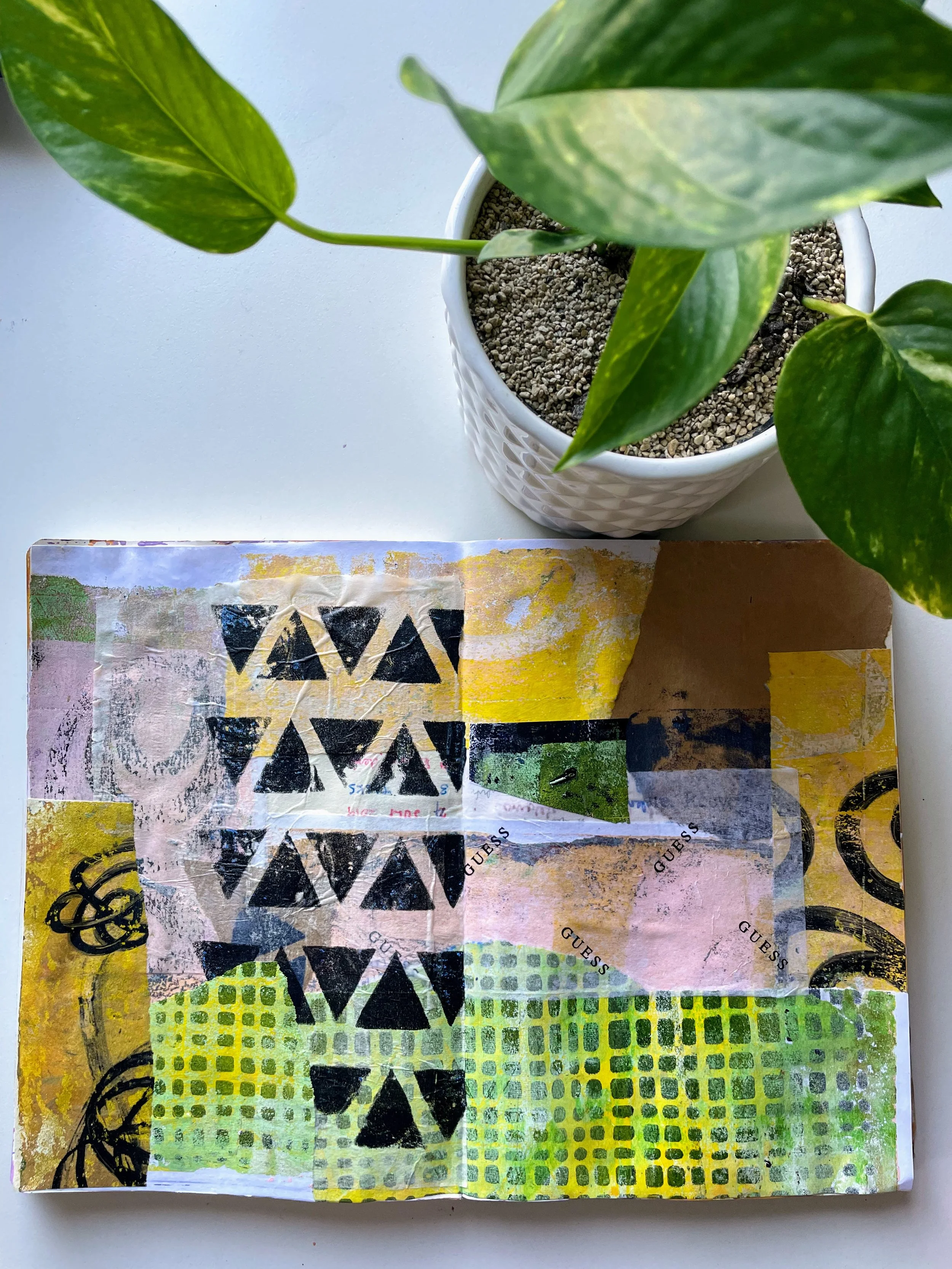
Collage in sketchbook
Having heard many artists rave about the #The100Dayproject, I decided to jump onto the bandwagon. The 100-day project is a global art movement, much like Inktober, but for 100 days. You can do anything you want, draw, paint, dance, sing, play an instrument, just anything you want to improve, for 100 days and then share the process on Instagram. The benefits of doing this challenge seem endless, from making art a daily habit to finding your unique artistic voice. If you would like to know more about the history of #The100Dayproject check out this blog by the artist Eb Hawks. Her blog explains it pretty well, including a few tips to stay at it.
I have done some small art challenges in the past, like a 14-day challenge and a 30-day challenge. Both worked wonders for me, as I showed up every day during the challenge and just did what I was supposed to do. Needless to say, I also saw a lot of improvement in my skills.
The 14-day Gelli plate printing was a way to have fun. There was no definite outcome in mind. I just showed up every day and made a mess, and got my hands dirty. There was no pushback or procrastination because it was genuinely fun. You can read about it here in this previous blog post.
The 30-day watercolour exercises were an extremely specific challenge. I can't remember if I had any definite outcome in my mind as it was over a year ago. This challenge was designed around a watercolour practice book I bought called ‘Watercolour Landscapes- Step by Step’ by Milind Mullick. Milind Mullick is a very famous Indian artist and a seasoned watercolourist, His paintings were the ones we studied in my watercolour classes. His landscapes are dreamy-like. To watch him paint is so much joy. So I decided to paint one landscape painting every day from his books. I copied his paintings into my sketchbook and sometimes followed his step-by-step tutorials on YouTube.

A practice session
I thought I was an expert in watercolours, but revisiting his paintings and studying them gave me so much more ideas to explore and implement in my watercolour paintings. I learned how to be loose, and how to create interest in the artwork by making colours bleed into each other and unintentionally using bizarre colours that don't exist in reality. He says in his book, and I am paraphrasing it here “Try not to mix colours exactly as you see in reality, as it may result in a boring final artwork’
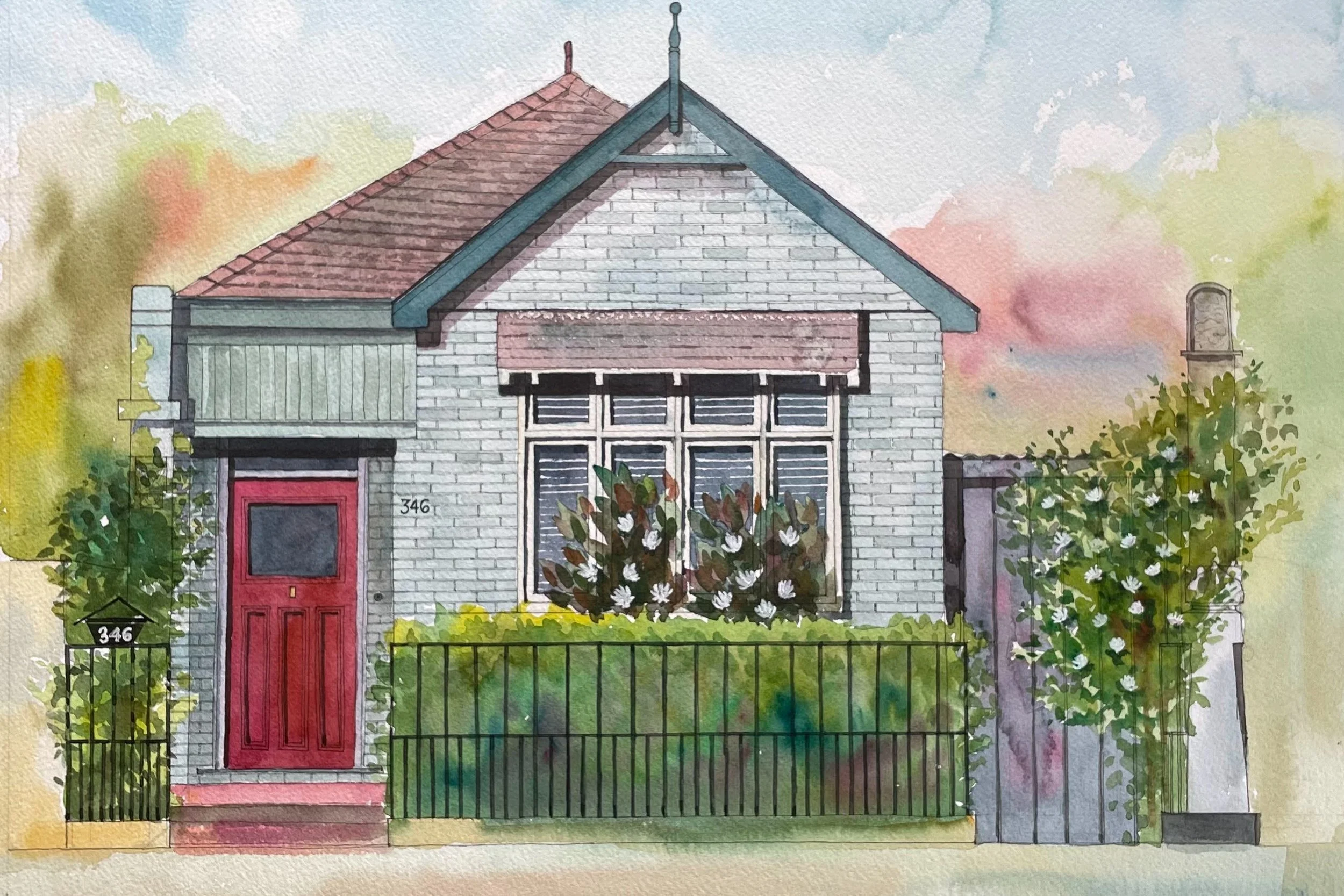
A house portrait
Why does it feel like I failed this time?
The topic was too vague. I chose a very broad topic. I thought a broad topic meant more wiggle room for me. I can choose whatever I want to create every day. But it backfired. Such ambiguity means a lot of decision-making every day. I honestly regret the decision to do the challenge this year. I am also a part-time artist who also does commission work. I loaded too many things on my plate. I got burned out, again.
How can I make it better?
Going wide and trying to do a bit of everything is not progress, it is just scratching the surface. I did some acrylic painting, some acrylic colour mixing, some watercolour sketchbook, acrylic sketchbook, collage in the sketchbook, acrylic on canvas, etc. It must be an exploration of one specific thing to make progress or at least feel like you are moving forward. I need to pick one topic and stick to it. I guess there is still plenty of time to course correct!
